What Is the Corrected Anion Gap Formula in Hypoalbuminemia?
Understanding an Anion Gap Calculator?
An anion gap calculator is a diagnostic tool used to calculate the anion gap from routine serum electrolytes. The formula typically uses sodium, chloride, and bicarbonate from a serum chemistry panel to evaluate acid-base balance. Because the anion gap reflects the difference between measured cations and measured anions, it can indicate the presence of unmeasured anions that are not apparent on standard laboratory testing.
In practice, the anion gap calculator is a assessment and review aid. It aids clinical interpretation of a laboratory result when a patient may have an electrolyte imbalance or a broader metabolic disorder. The standard calculation is commonly:
Anion gap = Sodium - (Chloride + Bicarbonate)
This result helps clinicians decide whether a patient’s acid-base status suggests metabolic acidosis, especially high anion gap metabolic acidosis. However, the value can be deceptive when albumin is low, which is why correction matters.
How Hypoalbuminemia Changes the Anion Gap
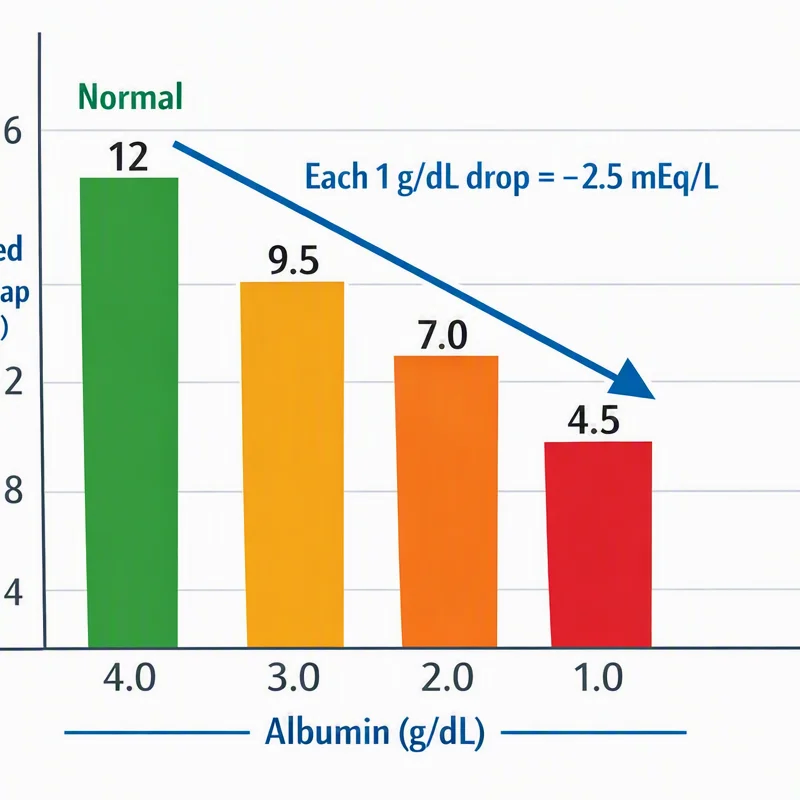
Albumin is a key negatively charged protein in plasma and a key unmeasured anion. When hypoalbuminemia is present, the measured anion gap may appear lower than expected because there are less negatively charged proteins contributing to the gap. This creates a risk of underestimation of the true acid load.
From an acid-base balance perspective, low albumin reduces the baseline anion gap even if the patient has an significant acid accumulation. That means a patient with marked metabolic acidosis can have a “normal” reported gap if the albumin level is not considered. This is especially relevant when evaluating lactic acidosis, ketoacidosis, or acidosis related to renal failure.
Because the anion gap is an indirect measurement, it is influenced by the patient’s protein status and other components of the serum environment. That is why the raw number from a calculator is only the starting point. The correct interpretation depends on the albumin level, the laboratory reference range, and the overall clinical assessment.
What’s the Corrected Anion Gap Formula?
The adjusted anion gap refines the measured value for reduced serum albumin. An often used correction formula is:
Corrected anion gap = Measured anion gap + 2.5 × (4.0 - serum albumin in g/dL)
In this formula, reference albumin is 4.0 g/dL, which serves as a typical normal value used for the adjustment. If albumin is reported in g/L, the formula must be modified to match that unit. The correction factor of 2.5 indicates the approximate rise in anion gap for each 1 g/dL decrease in serum albumin below the reference interval.
This adjustment improves test accuracy when using an anion gap calculator to evaluate patients with suspected acid retention. The purpose is not to replace the original value, but to improve results interpretation by estimating what the anion gap might be if albumin were normal.
Some clinicians use slightly different correction approaches, but the core principle is the same: low albumin lowers the measured gap, so the result should be adjusted before concluding that the patient has a normal anion gap.
Example Walkthrough of the Correction
Here is a simple example calculation using a typical serum chemistry result:
Suppose the patient has:
- Sodium = 140 mEq/L
- Chloride = 104 mEq/L
- Bicarbonate = 20 mEq/L
- Albumin = 2.0 g/dL
First, calculate the measured anion gap:
140 - (104 + 20) = 16
Now apply the albumin correction:
Corrected anion gap = 16 + 2.5 × (4.0 - 2.0)
Corrected anion gap = 16 + 2.5 × 2
Corrected anion gap = 16 + 5
Corrected anion gap = 21
The corrected value is 21, which is above the expected normal range in many settings and may support concern for anion gap metabolic acidosis. Without correction, the patient’s gap of 16 might have seemed only mildly elevated or even borderline, depending on the reference interval.
This is the real-world usefulness of an anion gap calculator: it provides a baseline, but the albumin-adjusted outcome can uncover a more accurate assessment of the actual acid-base imbalance.
How to Read a Corrected Anion Gap
Clinical interpretation starts with the measured gap, but the corrected value often shifts the conclusion. A normal anion gap after correction does not fully exclude disease, but it may decrease suspicion for a major accumulation of unmeasured acids. A clearly elevated corrected value supports evaluation for metabolic acidosis caused by an excess of acids or a loss of bicarbonate.
If the corrected anion gap is high, clinicians evaluate causes such as lactic acidosis, ketoacidosis, and renal failure. These conditions raise unmeasured anions and can https://anion-gap-estimator556.huicopper.com/can-diabetes-trigger-a-high-anion-gap produce clinically important acid burden. If the corrected anion gap is normal, the differential turns toward a normal anion gap pattern, often associated with bicarbonate loss or chloride gain.
Interpretation should be integrated with the patient’s symptoms, medications, vital signs, and other laboratory findings. The corrected number is best used as part of a broader patient assessment rather than as a standalone diagnosis. In short, the correction improves the reliability of the anion gap as a clue to the underlying metabolic disorder.
Typical Causes of Hypoalbuminemia
Because the correction depends on serum albumin, identifying the cause of low albumin is useful in practice. Common causes include malnutrition, liver disease, kidney disease, and inflammation. Any of these conditions may reduce the albumin level through reduced production, enhanced loss, or redistribution.
In liver disease, albumin synthesis may decline. In kidney disease, protein loss through the urine can reduce albumin concentration. During inflammation, albumin often drops as part of the acute-phase response. In malnutrition, poor protein intake may contribute to a low serum protein state.
These causes are important because the correction formula is only as useful as the clinical context in which it is applied. A low albumin concentration may signal an additional illness that also contributes to acid-base abnormalities, making the evaluation more complex.
Limitations of the Revised Anion Gap
Although the revised formula enhances diagnostic precision, it has notable drawbacks. There can be test variation between devices and result formats, which affects the apparent normal range and the final result. The correction also assumes a fixed relationship between albumin and the anion gap, which may not hold in each patient.
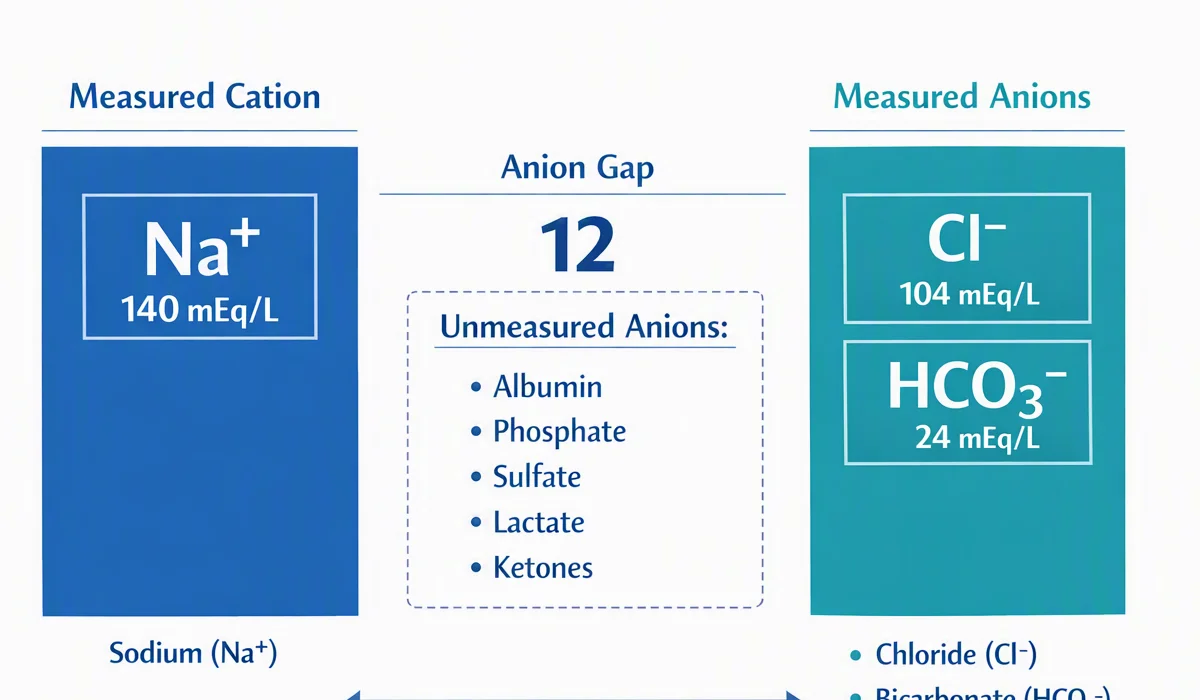
In critical illness, multiple factors can alter the acid-base picture all at once. Patients may have changes in lactate, ketones, phosphate, sulfate, or other unmeasured substances. These testing limitations mean the corrected anion gap should never be used in isolation.
One more limitation is that the correction does not identify the specific cause of acidosis. It only estimates whether a genuine gap elevation may be present. More testing, including blood gas analysis and serial chemistry panels, is often needed for a more complete patient assessment.
When to Use an Anion Gap Calculator in Clinical Practice
An anion gap calculator is especially useful when evaluating a patient with possible acid-base disorders, especially if the serum bicarbonate is low or the clinical picture points to a occult acid load. It is also useful when albumin is decreased and the measured gap seems unexpectedly normal.
A blood gas may verify pH and respiratory compensation, while the chemistry panel supplies the sodium, chloride, and bicarbonate values used for the gap calculation. Together, these data aid better clinical decision-making. In suspected acidosis, the calculator helps determine whether the pattern fits an increased gap state or a non-gap process.
For best use, the result should be reviewed alongside symptoms, kidney function, glucose, lactate, and ketone testing when appropriate. This integrated evaluation improves bedside reasoning and reduces the chance of missing an important acid-base problem.
Frequently Asked Questions Regarding Corrected Anion Gap
What’s the formula for corrected anion gap in hypoalbuminemia?
A commonly used formula is: Corrected anion gap = Measured anion gap + 2.5 × (4.0 - serum albumin in g/dL). It raises the measured value upward when albumin is low so the result better represents the patient’s true acid-base state.
Why do you correct the anion gap for low albumin?
You correct it because albumin is a major unmeasured anion. When albumin is reduced in hypoalbuminemia, the raw anion gap may appear falsely low or normal. The correction improves interpretation and reduces the risk of underestimation of metabolic acidosis.
Which albumin value is used as the reference in the correction formula?
The usual reference albumin is 4.0 g/dL. That value serves as the standard point in the correction formula. If the patient’s albumin is below 4.0 g/dL, the calculated adjustment increases the corrected anion gap.
Can a normal anion gap mask metabolic acidosis when albumin is low?
Yes. A normal anion gap can mask clinically significant acidosis when albumin is low because the measured result may be suppressed by hypoalbuminemia. That is why albumin correction is important when evaluating possible high anion gap metabolic acidosis or other forms of metabolic acidosis.
How ought a corrected anion gap be interpreted clinically?
The corrected value should be interpreted in the context of the full picture: symptoms, serum electrolytes, blood gas results, kidney function, and the likely cause of the disorder. A high corrected result raises concern for an increased acid burden from causes such as lactic acidosis, ketoacidosis, or renal failure. A normal corrected result may point toward a normal anion gap process, but it does not replace broader clinical assessment.